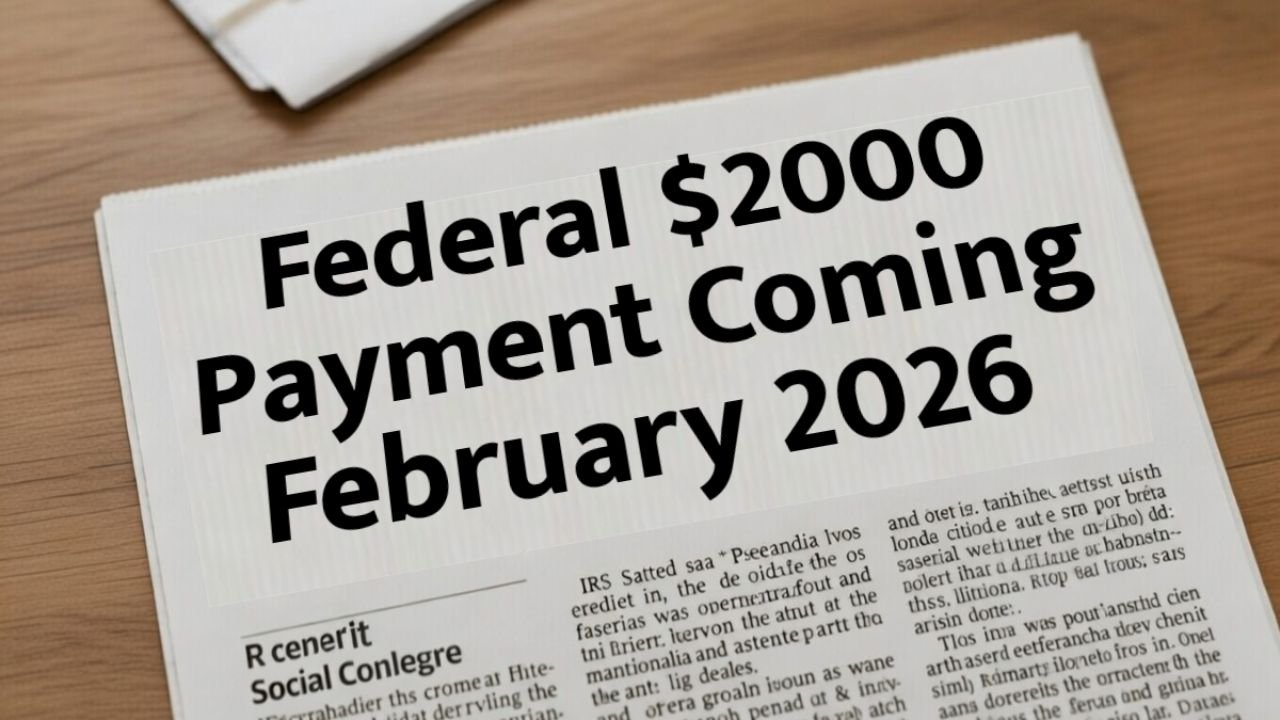
As February 2026 approaches, discussion around a possible federal $2,000 payment is once again gaining momentum across the United States. Retirees, disability beneficiaries, veterans, and low-income households are seeing claims online that new financial relief is imminent. These conversations are happening at a time when many families feel that everyday expenses remain high, even as broader inflation indicators show signs of stabilization. For people living on fixed or limited incomes, financial pressure has not disappeared.
Despite the growing attention, it is important to be clear about the current situation. No federal $2,000 payment has been officially approved for February 2026. No legislation has passed, no executive order has been signed, and no government agency has announced a confirmed payment schedule. What exists today is discussion and speculation, not an active federal program.
Why Direct Payment Discussions Have Returned

The renewed focus on direct payments reflects ongoing economic strain faced by millions of Americans. While wages and benefits have increased in recent years, many households report that these adjustments have not kept pace with real-world expenses. Housing costs, medical care, insurance premiums, and grocery prices continue to stretch monthly budgets.
Seniors and people with disabilities are particularly affected because they rely on fixed incomes that offer limited flexibility. Even modest price increases can have a meaningful impact on daily living. As these concerns grow louder, lawmakers are under increasing pressure to explore short-term relief options that could ease financial stress for vulnerable groups.
Why This Would Not Be a Broad Stimulus Program
If a $2,000 payment were to move forward, it would likely look very different from the broad stimulus checks issued during the pandemic. Those earlier payments were designed to reach as many people as possible during a national emergency and were funded through significant federal spending.

In 2026, the political and economic environment is more cautious. Lawmakers are focused on targeted assistance rather than wide-ranging programs. Any potential payment would likely be limited to specific groups, such as Social Security retirees, Supplemental Security Income recipients, Social Security Disability Insurance beneficiaries, or certain veterans. Targeted programs reduce overall cost and rely on existing systems to deliver payments efficiently.
What Is Confirmed and What Remains Unverified
At this stage, no federal agency has confirmed a $2,000 payment for February 2026. The Treasury Department, the Social Security Administration, and the Internal Revenue Service have not issued any official statements announcing such a program.
The February timeline circulating online appears to stem from informal discussions and public speculation rather than finalized policy decisions. Without congressional approval, no agency has the authority to distribute payments. Claims suggesting that checks are already approved or being processed are not supported by official information.
Who Could Be Eligible If Approved
If lawmakers eventually authorize a payment, eligibility would almost certainly be limited. Early policy conversations suggest that individuals already receiving federal benefits would be the primary focus. These groups are easier to identify because income, identity, and payment information are already on file.
This approach would mean that not all Americans would qualify, and eligibility rules could include income limits or benefit status requirements. Any payment would most likely be delivered through direct deposit to existing accounts, while paper checks could still be an option for those without banking information on record.
Why No Application Process Is Expected
One consistent theme in discussions around potential payments is simplicity. Policymakers want to avoid complex application systems that slow down delivery and increase fraud risk. Using existing government records allows payments to be issued more quickly and securely.
Because of this, no legitimate federal payment program would require people to apply through online links, text messages, or phone calls. Government agencies do not charge fees to release benefits and do not request sensitive information through unsolicited contact. Messages claiming otherwise should be treated with caution.
Public Response and Growing Skepticism
Public reaction to the idea of a $2,000 payment is mixed. Many older Americans and low-income households view it as recognition that financial recovery has not been evenly felt. Online discussions frequently include stories of difficult choices, such as delaying medical care or cutting back on essentials to stay within budget.
At the same time, skepticism is widespread. Past experiences with delayed programs and changing eligibility rules have made many people cautious. There is a growing awareness that online rumors often circulate long before any real policy decision is made.
Scams Rising Alongside Payment Rumors
Whenever talk of federal payments increases, scams tend to follow. Fraudsters exploit uncertainty by sending messages that promise guaranteed deposits or early access to funds. These messages often request bank account details, Social Security numbers, or one-time verification fees.
Government officials consistently warn that real federal programs are announced clearly through official channels. Payments are never released based on unsolicited emails, texts, or phone calls. Staying informed through trusted government sources remains the best defense against fraud.
How This Proposal Differs From Past Relief Payments
Compared to pandemic-era stimulus checks, this proposal reflects a shift in priorities. Earlier payments aimed to stabilize an economy in crisis. In 2026, the focus is on managing long-term affordability without dramatically expanding federal spending.
Targeted payments are more politically acceptable and easier to justify, but they also face challenges. Congressional negotiations could reduce the payment amount, delay implementation, or replace cash assistance with other forms of support, such as expanded benefits or tax relief.
What to Expect in the Months Ahead
The coming months will determine whether the $2,000 payment idea advances or fades away. If legislation is introduced, clearer details about eligibility, funding, and delivery methods will follow. Budget discussions and broader political considerations will heavily influence the outcome.
For now, financial experts advise caution. Planning household budgets around unapproved payments can lead to disappointment. Until a bill is passed and formally implemented, the federal $2,000 payment for February 2026 remains a possibility, not a guarantee.
Staying Informed and Financially Prepared
The best approach for beneficiaries is to stay informed through official government announcements and avoid relying on social media claims. Keeping personal information updated with relevant agencies ensures readiness for any future programs that may be approved.
While the idea of a federal $2,000 payment offers hope to many households, clarity will only come with formal action. Until then, careful planning and reliable information remain essential.
Disclaimer
This article is for informational purposes only and does not provide financial, legal, or tax advice. No federal $2,000 payment for February 2026 has been approved or officially announced at this time. Any such program would require congressional approval and formal implementation by government agencies. Readers should rely on official government sources for accurate and up-to-date information.