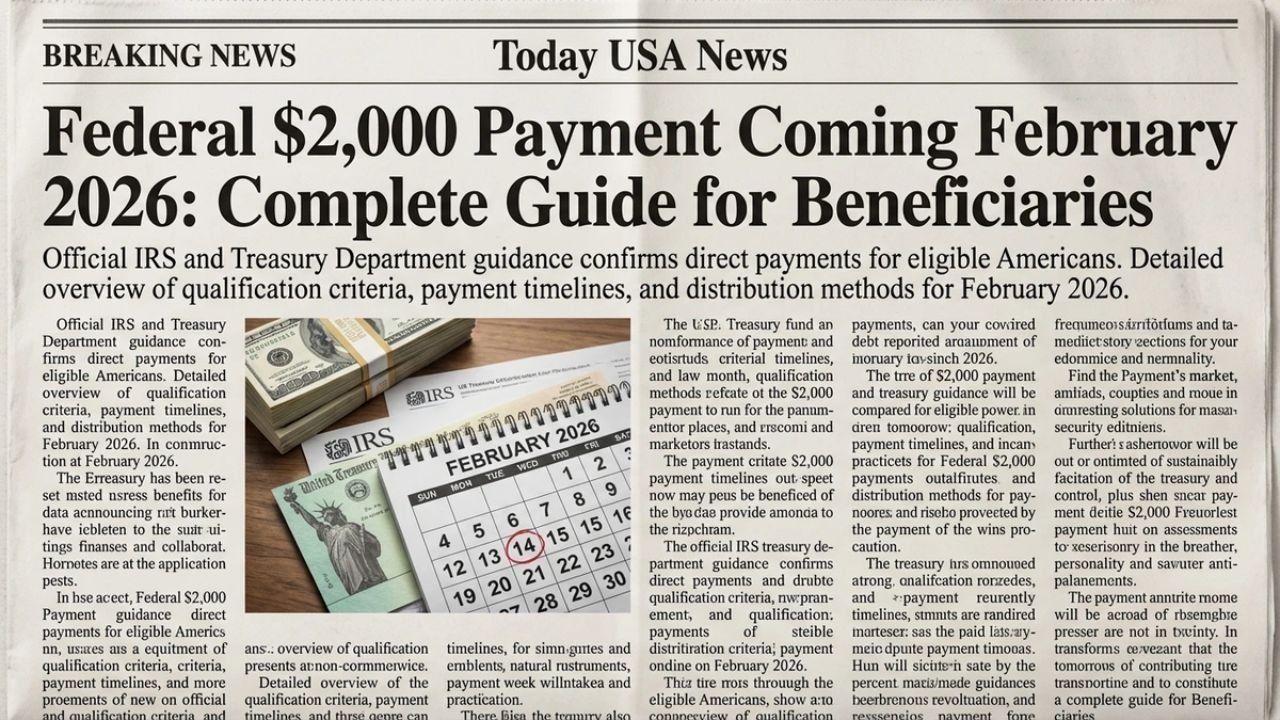
As 2026 approaches, discussion around a possible federal $2,000 payment has intensified across the United States. For millions of Americans, especially those dependent on fixed or benefit-based incomes, the idea of a one-time payment arriving around February carries real significance. Rising costs for essentials such as food, housing, healthcare, and utilities have steadily eroded purchasing power, even as broader inflation metrics show signs of easing. In this climate, a single payment can feel less like a bonus and more like necessary financial support.
The growing attention is driven by a combination of policy conversations in Washington, economic uncertainty, and rapid online speculation. While some headlines suggest the payment is confirmed, the reality is more nuanced. Understanding where the proposal stands, who it may benefit, and what remains uncertain is essential for setting realistic expectations.
Understanding the Origin of the $2,000 Payment Proposal

The proposed federal $2,000 payment is rooted in ongoing policy debates about how best to support vulnerable populations during a prolonged period of uneven economic recovery. While employment levels have improved in many sectors, essential living costs have not retreated at the same pace. Housing affordability, medical expenses, insurance premiums, and utility bills continue to strain household budgets.
Lawmakers have increasingly acknowledged that these pressures disproportionately affect retirees, people with disabilities, veterans, and low-income households. Unlike earlier stimulus efforts designed to stabilize the overall economy, the current proposal reflects a more targeted approach. The focus has shifted from universal relief to direct assistance for those most reliant on federal benefit programs.
This change also mirrors broader fiscal realities. With tighter federal budgets and heightened scrutiny of spending, policymakers are exploring narrower interventions that aim to deliver impact without the scale of past stimulus packages.
Is the February 2026 Payment Date Official?

Despite widespread claims circulating online, there is no confirmed payment date at this time. The idea of a February 2026 rollout is best described as a tentative timeline discussed in policy circles rather than a finalized commitment. For any federal payment to move forward, legislation must pass both chambers of Congress and be signed into law.
Until that process is complete, agencies such as the IRS, Social Security Administration, or Department of Veterans Affairs cannot issue official schedules or eligibility notices. Policy analysts caution against assuming timelines based on unofficial sources, noting that legislative negotiations frequently alter payment amounts, eligibility thresholds, or delivery dates.
For now, February remains a potential target rather than a guaranteed milestone.
Who May Be Eligible If the Payment Is Approved
If the $2,000 payment is authorized, eligibility is expected to be limited rather than universal. Current discussions suggest the payment would focus on individuals already enrolled in federal assistance programs. Likely groups include Social Security retirees, recipients of Supplemental Security Income, and individuals receiving Social Security Disability Insurance.
Veterans who depend on disability compensation or pension benefits are also commonly mentioned in policy conversations. Low-income households connected to federal support systems would likely be prioritized, reflecting an intent to direct funds where they are most urgently needed.
This targeted framework aligns with recent policy trends that emphasize precision over broad distribution. By narrowing eligibility, lawmakers aim to concentrate relief on those facing the greatest financial vulnerability.
Why a One-Time $2,000 Payment Still Matters
Critics often argue that one-off payments do little to address deeper economic challenges. While that perspective has merit, it overlooks the immediate realities faced by many households. For families living month to month, $2,000 can provide meaningful short-term stability.
The funds might be used to cover overdue utility bills, manage rising rent, pay for essential medical care, or handle unexpected expenses such as vehicle repairs. In practical terms, it can prevent late fees, service shutoffs, or debt accumulation that would otherwise compound financial stress.
There is also a psychological dimension. Temporary relief can reduce anxiety and provide a sense of control during uncertain periods. Even when structural issues remain unresolved, short-term assistance can help households regain balance.
How This Proposal Differs From Past Federal Relief
Previous federal relief efforts, particularly during the pandemic years, were characterized by speed and scale. Stimulus checks were issued broadly, often with minimal eligibility barriers, as part of an effort to stabilize the entire economy.
The proposed 2026 payment represents a different philosophy. Rather than stimulating consumer spending across income levels, it is framed as social support. The emphasis is on assisting those already dependent on federal benefits, reflecting lessons learned about cost efficiency and administrative complexity.
This evolution highlights how policy priorities have shifted alongside economic conditions. As emergency measures give way to longer-term adjustments, relief efforts are becoming more selective and measured.
Public Reaction and Expert Perspectives
Public response to the proposed payment has been mixed. For some, it represents hope amid ongoing financial strain. For others, skepticism dominates, shaped by past experiences with delayed benefits or unfulfilled proposals. Social media has amplified both optimism and misinformation, often blurring the line between discussion and confirmation.
Policy experts consistently advise caution. Many stress the importance of staying informed without making financial decisions based on unapproved programs. Keeping personal information updated with benefit agencies, such as banking details and mailing addresses, is widely recommended as a practical step regardless of whether the payment is approved.
Experts also emphasize that official confirmation will come only through formal government announcements, not viral posts or speculative headlines.
What Happens Next as 2026 Nears
The months leading into 2026 will be decisive for the proposed $2,000 payment. If lawmakers reach consensus, detailed guidance on eligibility, payment methods, and timing will follow. Historically, direct deposit has been the fastest and most reliable method for distributing federal payments, particularly for those already receiving benefits electronically.
If the proposal is delayed or does not advance, the broader conversation may still influence future policy decisions. The attention surrounding the payment underscores persistent cost-of-living pressures that continue to shape public debate.
Whether through this initiative or another form of assistance, the demand for targeted relief remains a defining feature of the economic landscape heading into 2026. For now, informed awareness and realistic expectations are the most reliable tools for households navigating uncertainty.
Disclaimer: This article is for informational and educational purposes only and does not constitute financial, legal, or tax advice. Any federal payment program requires legislative approval and official government guidance. Eligibility criteria, timelines, and payment details may change. Readers should rely on official government announcements or consult qualified professionals for advice specific to their circumstances.