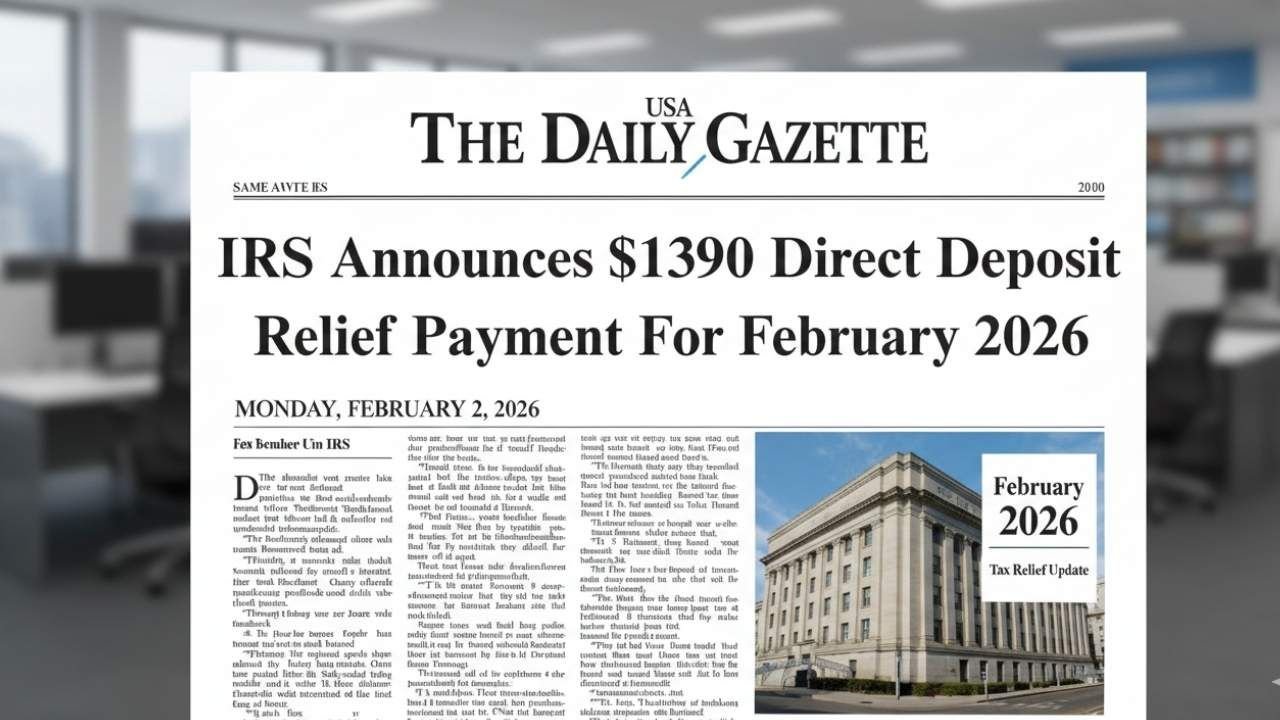
As 2026 progresses, reports about a $1,390 direct deposit relief payment from the IRS have sparked widespread discussion. Social media posts and online articles have fueled expectations, especially among families seeking financial support. However, it is crucial to understand that this payment has not been officially approved. At present, it remains a proposal, and no confirmation has been issued by the federal government.
What Is the $1,390 Direct Deposit Proposal?
The $1,390 payment under discussion is part of a proposed relief measure that has not yet passed through Congress. Some sources suggest it could be linked to tariff dividend funds that might be distributed to eligible taxpayers if approved. Without congressional authorization, this payment cannot be guaranteed. Any claims indicating that the money is already approved or being sent should be treated with caution.
Why This Payment Is Being Discussed

The proposal has gained attention due to continued financial pressures on many households. Rising inflation, higher living costs, and accumulated debt have left families searching for short-term relief. If approved, a $1,390 direct deposit could offer timely support to low- and middle-income individuals. Because the proposed payment is expected to be issued via direct deposit, taxpayers are being advised to ensure their bank and tax information is accurate, although preparation does not imply confirmation.
Possible Eligibility Conditions
If the $1,390 payment is authorized in the future, eligibility would likely follow standard federal requirements, which may include:
- Being a U.S. citizen or permanent resident
- Having filed recent tax returns
- Possessing a valid Social Security number
- Meeting certain income limits
Some Social Security beneficiaries might also qualify depending on additional IRS criteria. Until official rules are released, no eligibility is guaranteed.
How Taxpayers Can Prepare

Even though the payment is not confirmed, individuals can take practical steps to stay ready:
- File accurate and complete tax returns
- Keep bank account information updated for direct deposit
- Verify Social Security and personal details
These actions ensure that if the payment is approved, recipients are ready and avoid unnecessary delays. These measures are beneficial for any IRS-related disbursement, not just this proposal.
Official Updates and Trusted Sources
The Internal Revenue Service is the only reliable source for confirmation of federal payments. As of now, the IRS has not announced approval or issuance of a $1,390 direct deposit. Taxpayers should regularly monitor IRS.gov and other official government channels, and avoid relying on unverified online claims or social media posts.
Expected Timeline and Caution
There is currently no confirmed timeline for this proposed payment. Speculation may suggest early 2026, but actual issuance would depend entirely on congressional approval and IRS processing. Until official announcements are made, taxpayers should not plan finances around this proposal or share personal information on unofficial websites.
Final Understanding
The $1,390 direct deposit relief payment remains a proposal only. It is not approved, guaranteed, or scheduled. Families should focus on staying informed through official sources, avoid rumors, and ensure all tax and banking information is accurate. This approach reduces confusion and protects against potential financial mistakes.
Disclaimer: This article is for informational purposes only. The $1,390 direct deposit relief payment has not been officially approved or confirmed by the U.S. government or the IRS. Payment amounts, eligibility, and timelines may change or may not occur at all. Readers should rely on official IRS announcements or consult a qualified financial professional before making financial decisions.